
Professional
Flake Epoxy Flooring
in Huntsville and beyond
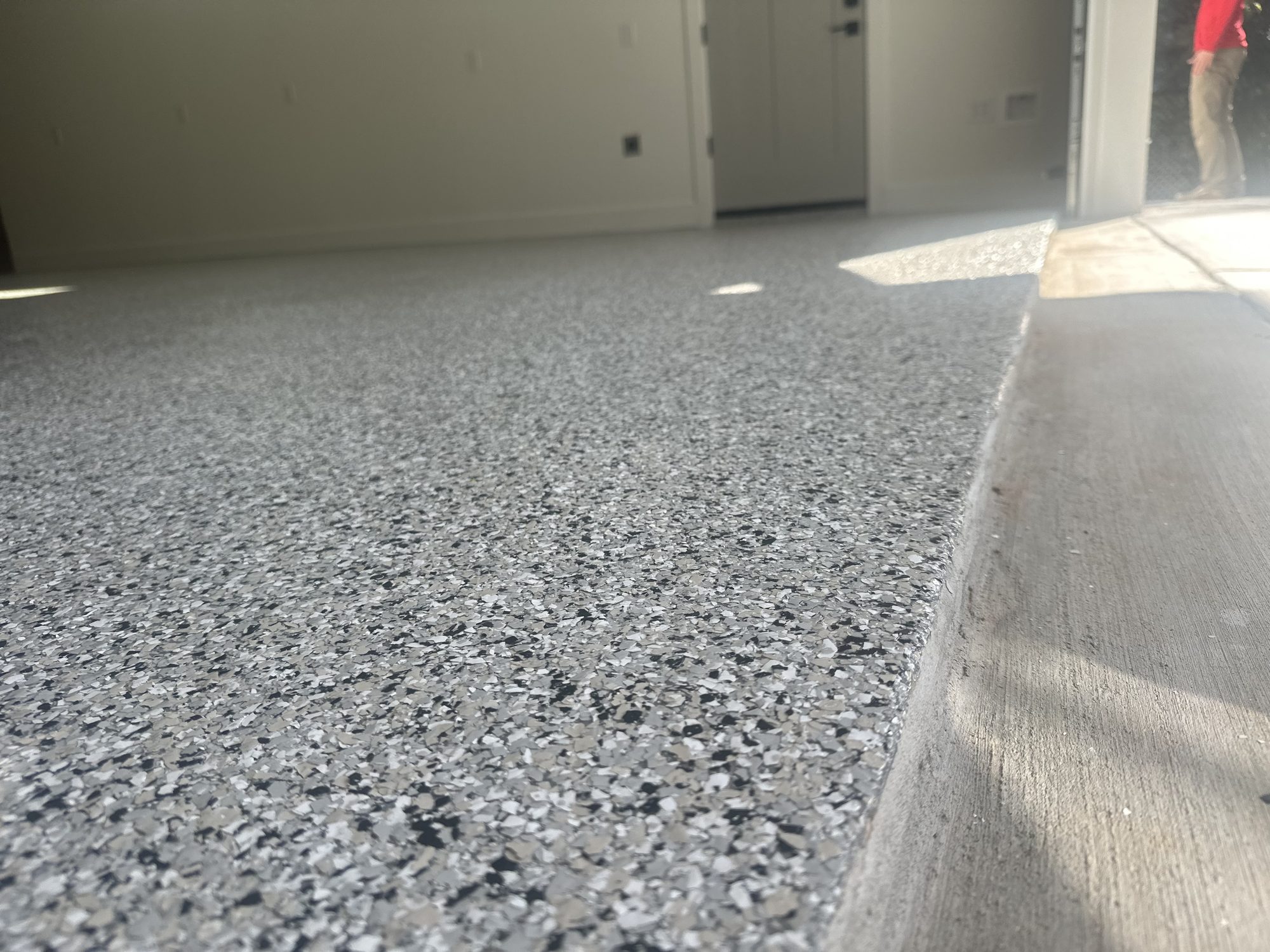
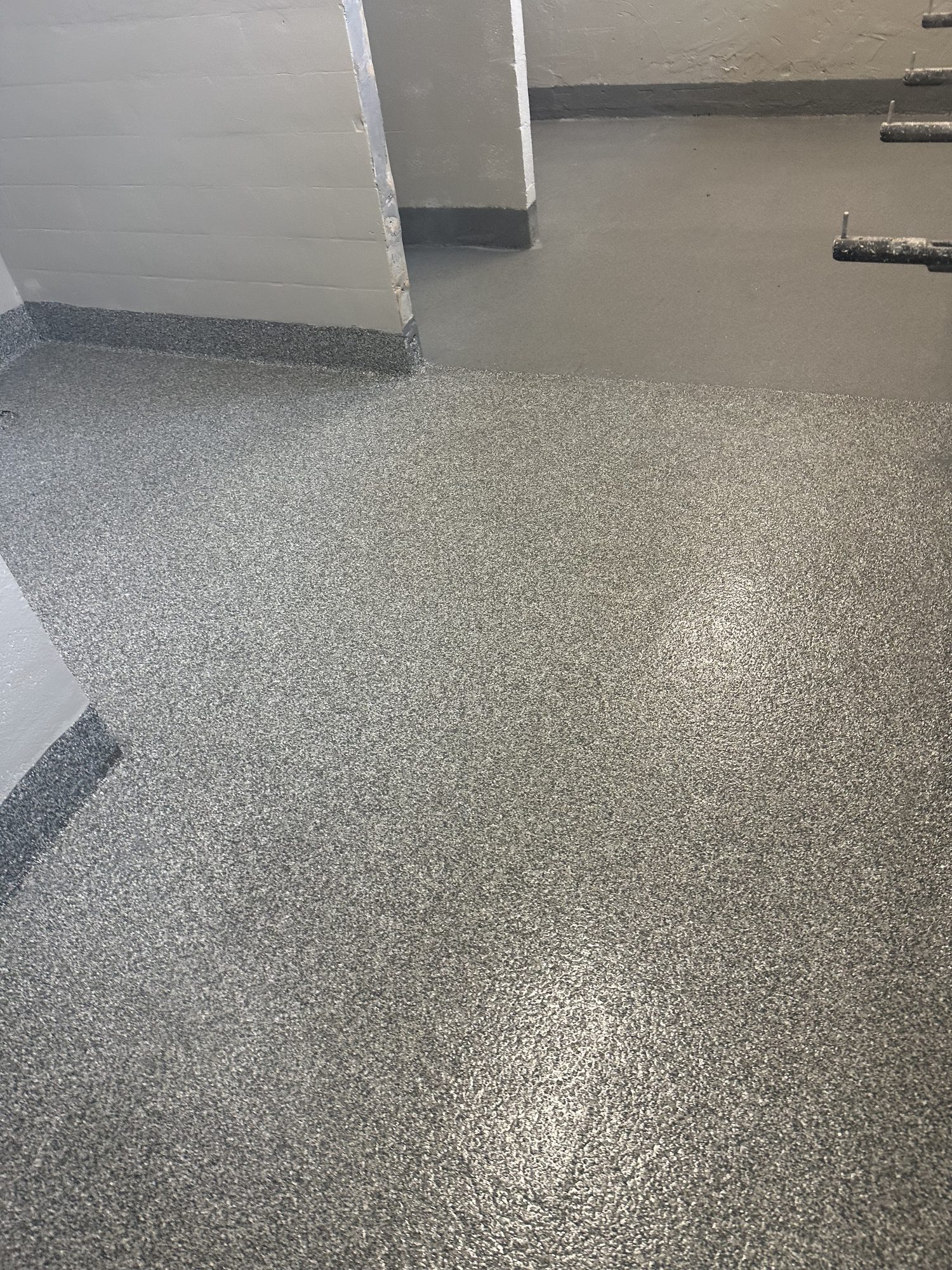
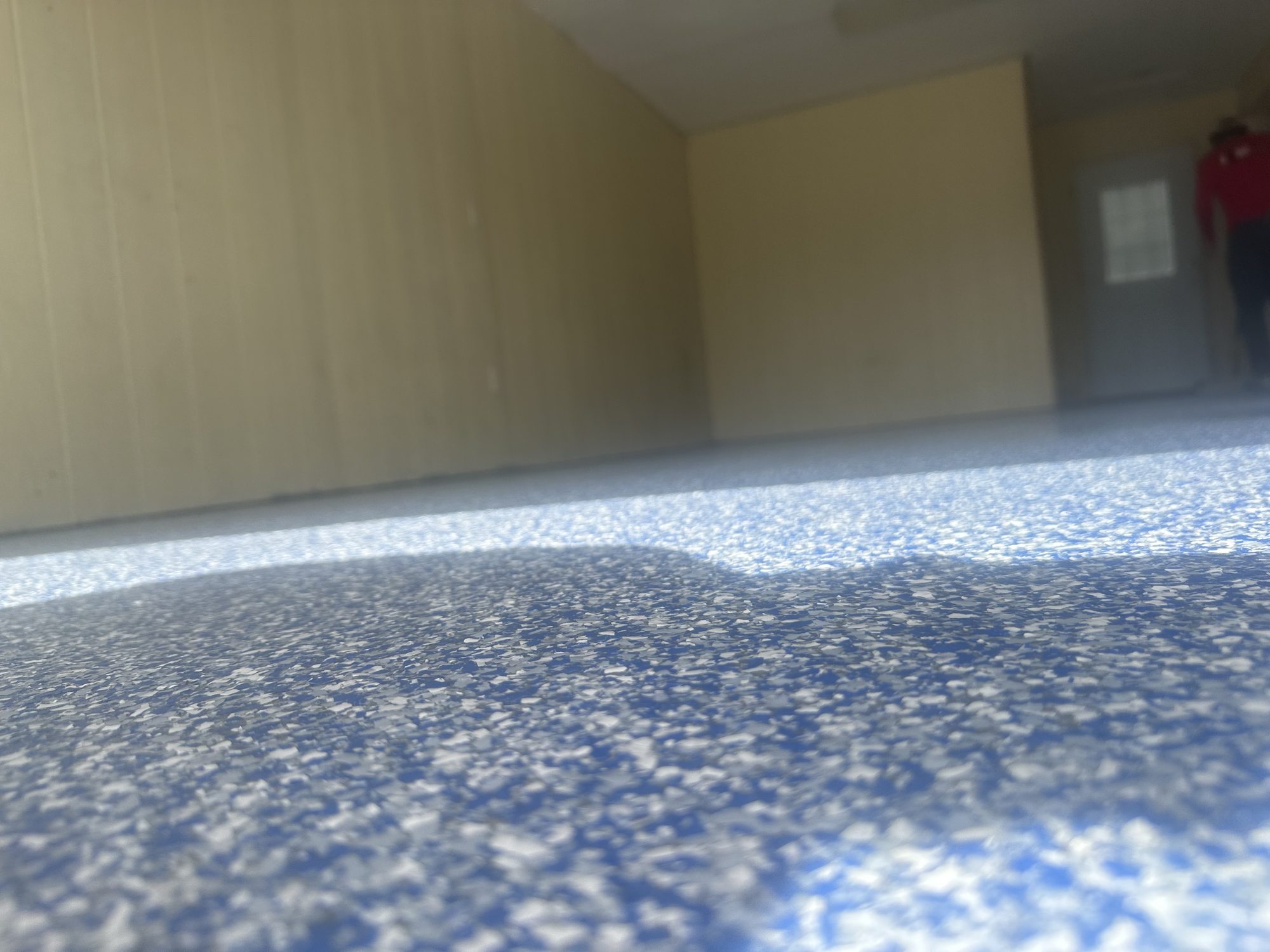
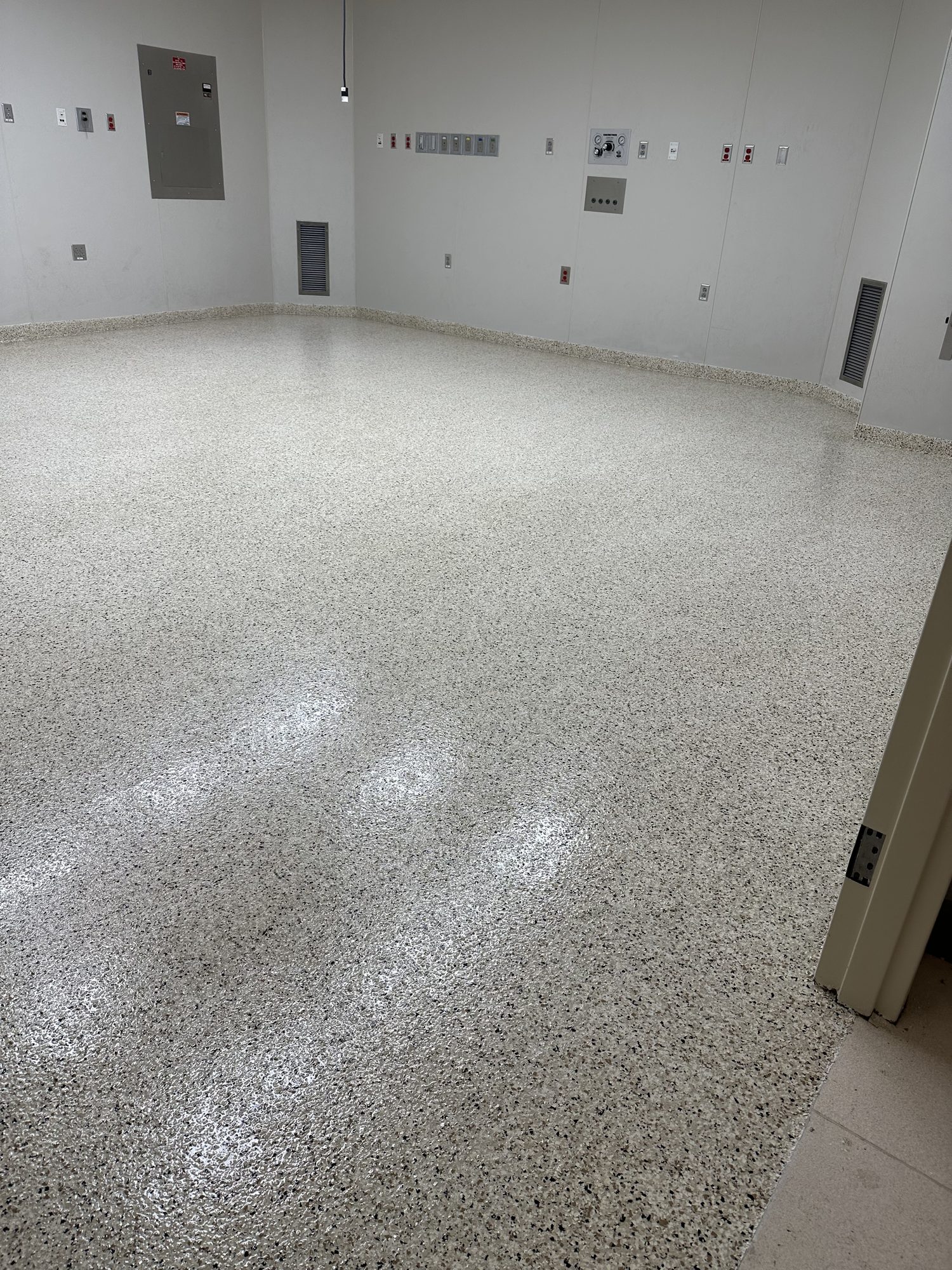
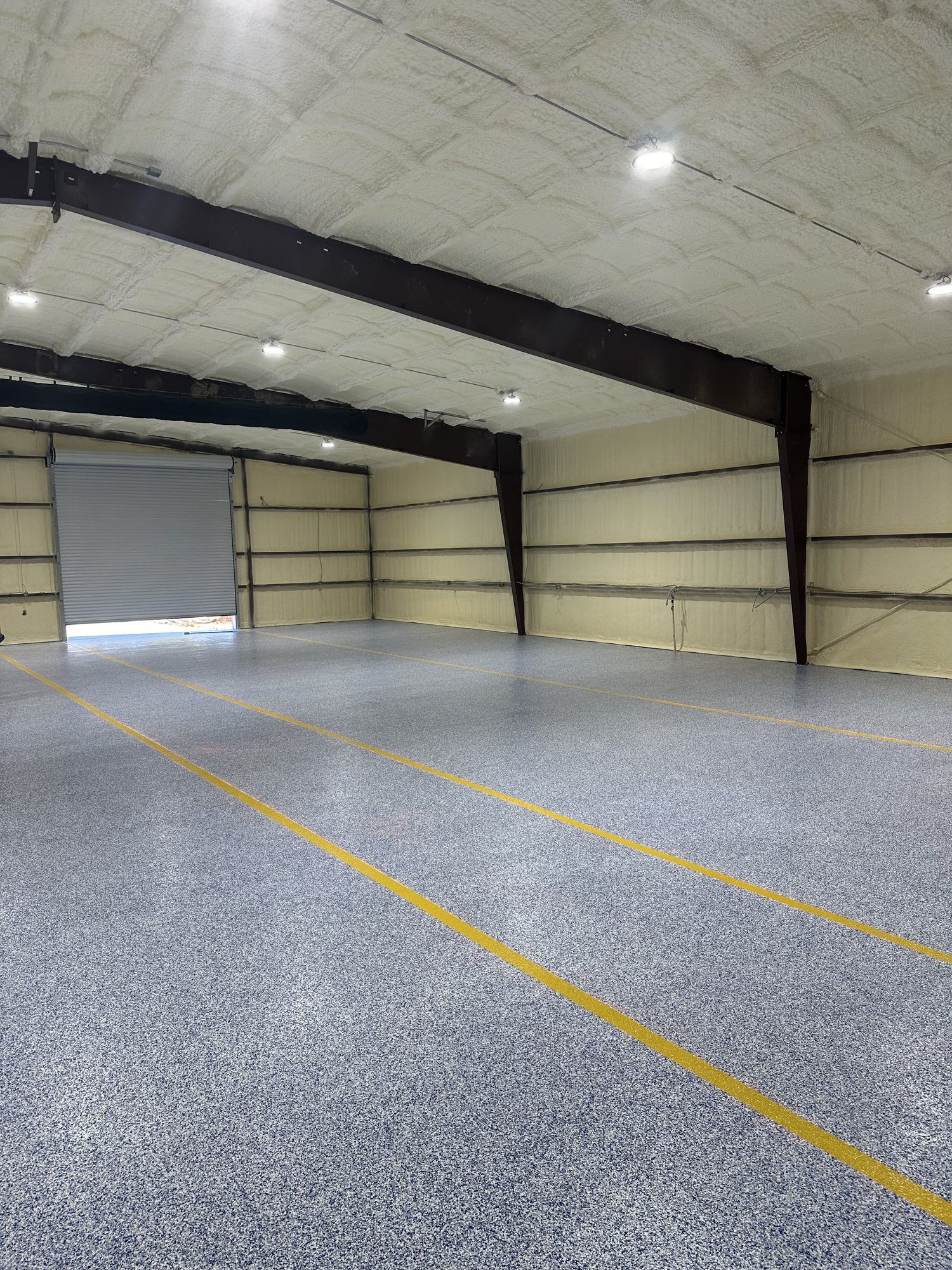
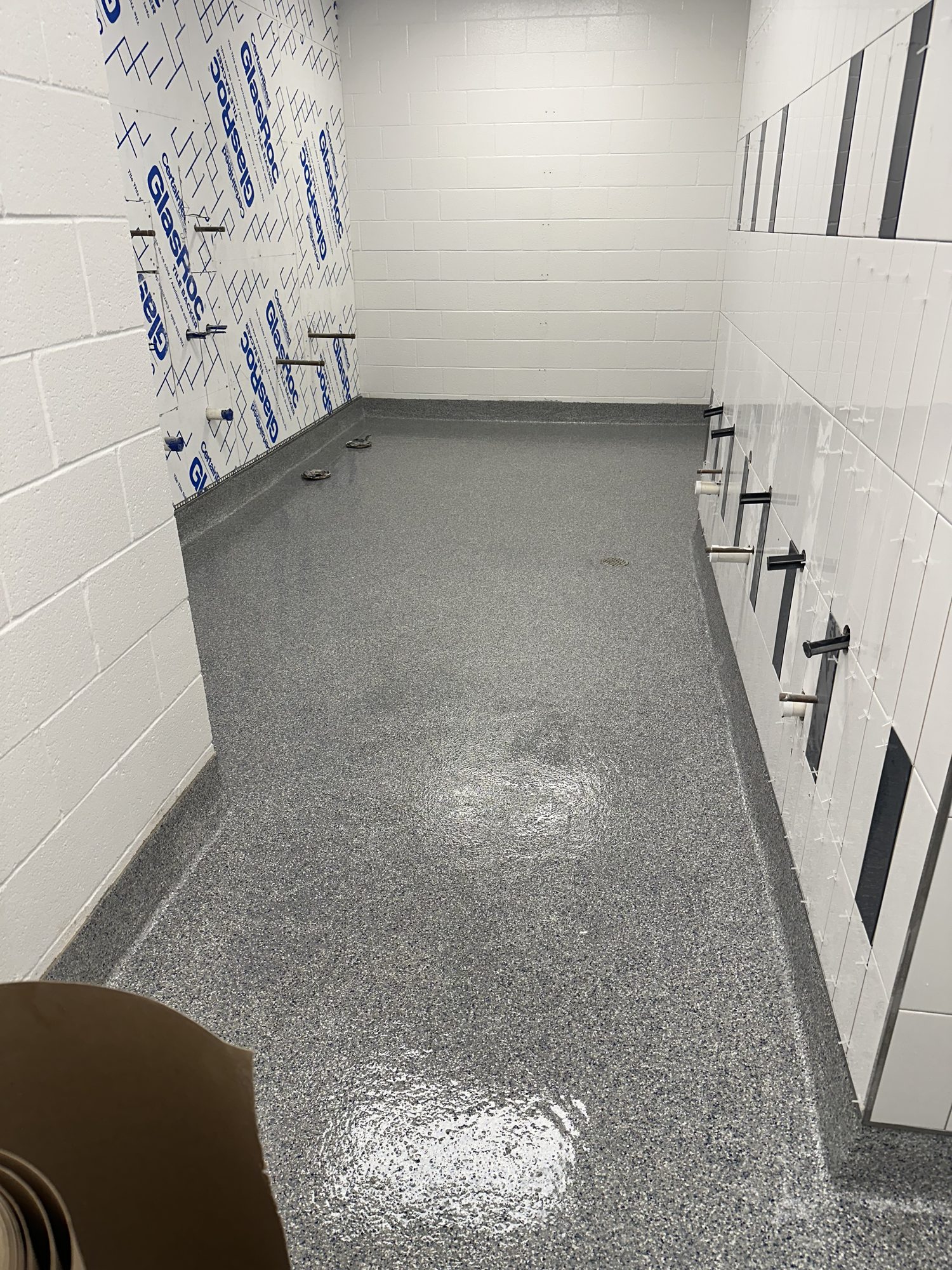
Vinyl flake broadcast into the base coat to full refusal, then locked under a clear top coat. The finish most garages get.
Get my free quoteFree quote . No obligation . Fast response
What it actually is
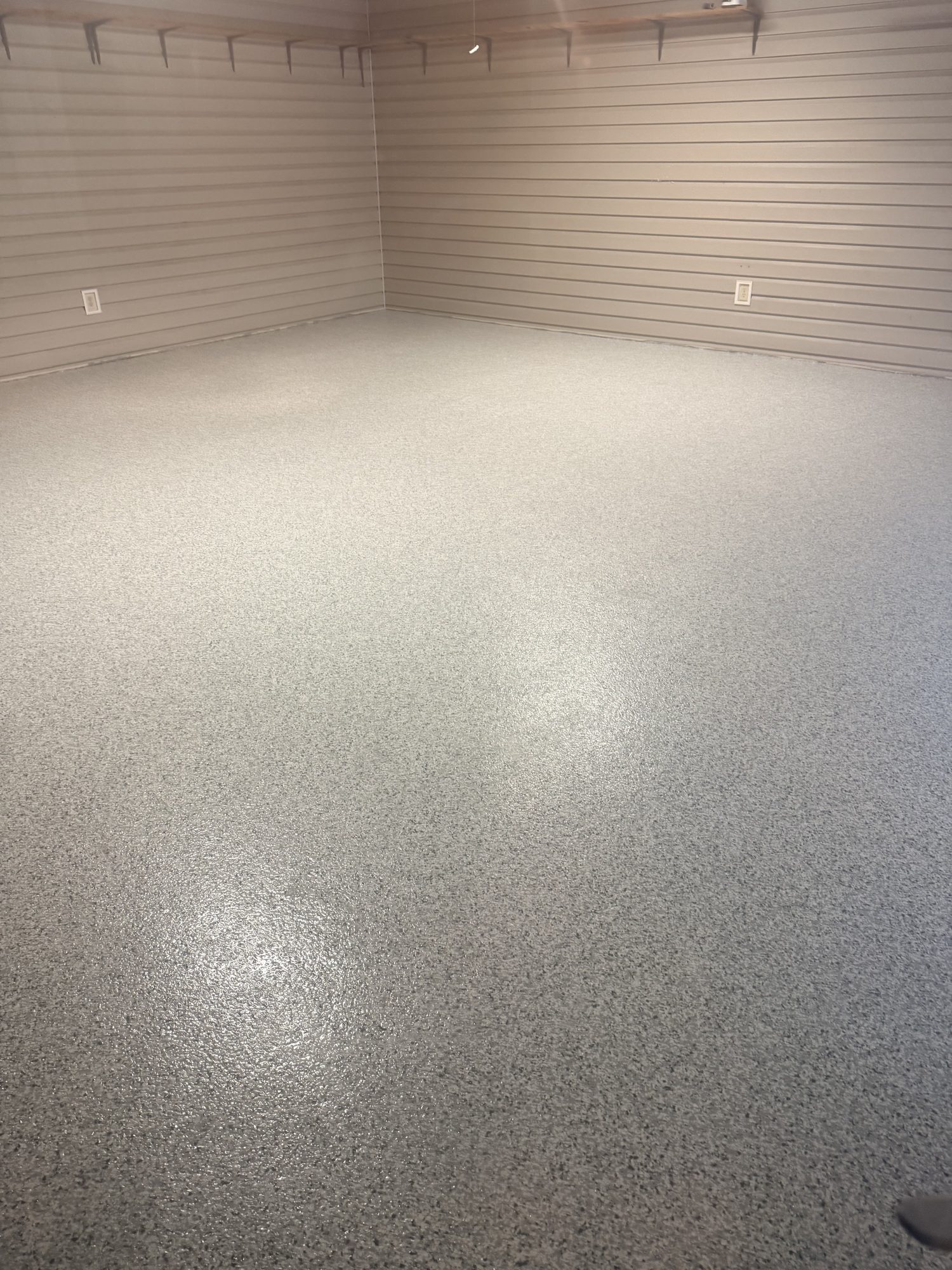
Flake goes on while the base coat is still wet. We broadcast it to refusal, which means we keep throwing chips until the floor will not take any more, then scrape back the loose material once it has set.
Broadcasting to refusal is what makes the finish consistent. A light scatter leaves thin spots that show as blotches once the clear coat goes over them.
The chip does real work beyond looks. It builds texture underfoot, and it hides the small variations in a slab that a solid color would put on display.
How we install it
Grind. Diamond grinding opens the slab and takes off sealer, glue, and whatever coating came before. Nothing bonds to a closed surface.
Repair. Cracks, pits, and spalled areas get filled with products that move the way the finish over them moves.
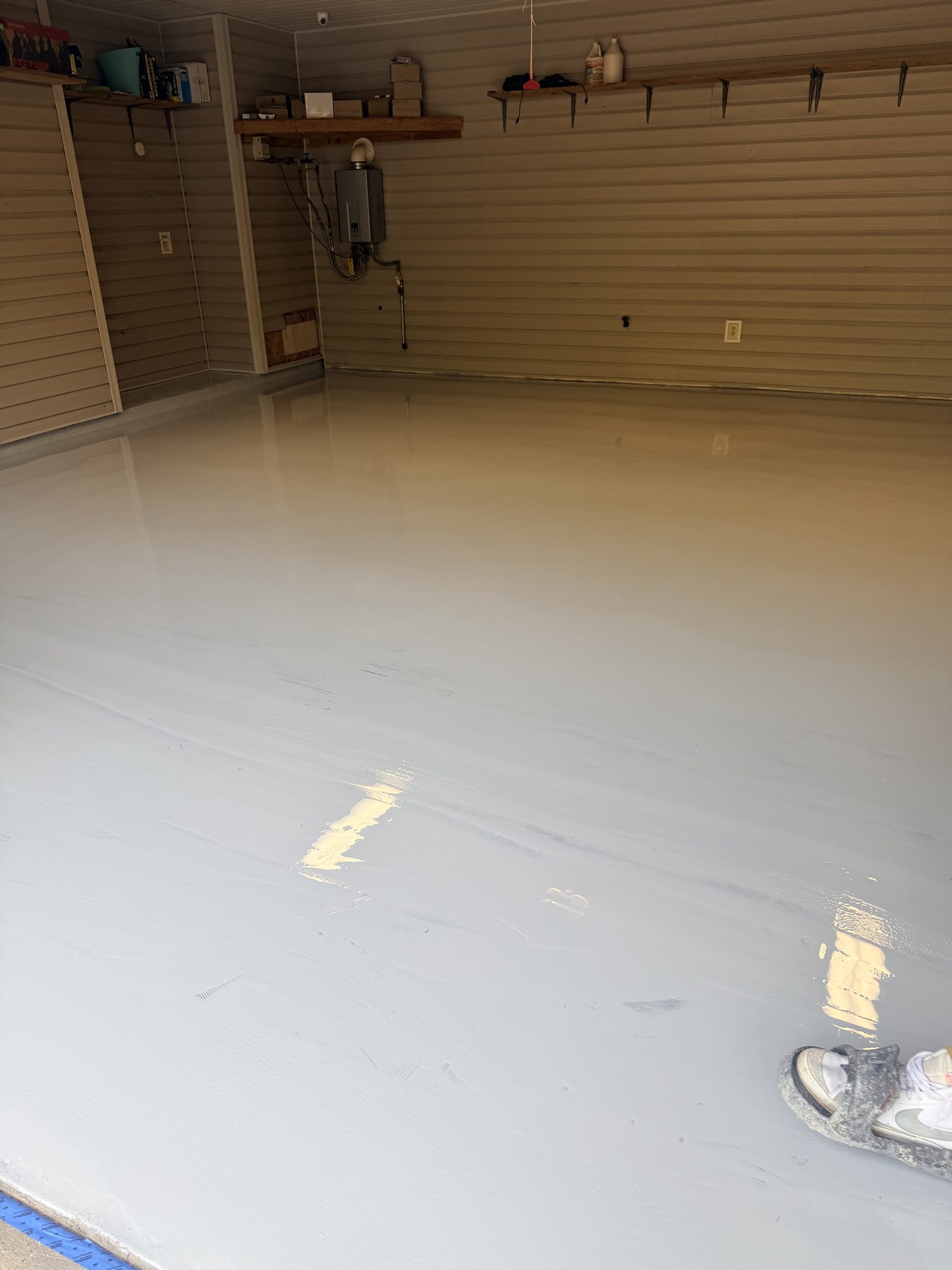
Base. A hundred percent solids base coat goes down. No solvent leaving the film as it cures, so the thickness you put on is the thickness you keep.
Broadcast. On a flake floor, chip goes into the wet base to refusal, then the loose material comes back off once it sets.
Top coat. A polyaspartic clear locks it in. It holds up to UV, so the floor stays the color it started.
Is this the right system for your floor?
People usually arrive having picked a finish from a photograph. That is a fine place to start and a poor place to finish, because the floor has to survive the room it is in. We work through it in this order.
Start with how the floor gets cleaned
This is the question that settles most of it. A floor that gets swept and occasionally mopped can take almost anything. A floor that gets hosed down, hit with degreaser and steam cleaned every night is a much shorter list, and in a commercial kitchen it usually comes down to urethane cement. People tend to start with how a floor should look. We start here, because a finish that cannot survive the cleaning routine will not last no matter how good it looked on day one.
Then what goes on it and what gets dropped
Hot tires pull at a coating in a way ordinary traffic does not, which is why garage floors get specified differently than basements. Forklift wheels, pallet corners and dropped tools argue for a thicker build. Chemicals matter less than people expect and more than they realize at the same time: a spill that gets wiped up is nothing, a spill that sits overnight is a different conversation.
Then moisture, which decides more than anything
Concrete on grade can pass vapor up through the slab for its whole life. If that moisture has nowhere to go and you put a sealed coating on top, pressure builds under the film and eventually lifts it in sheets. This is the most common cause of a floor failing that had nothing to do with the installer’s workmanship. It is also testable before anybody commits, and on a slab we have doubts about we would rather test than hope.
What goes wrong
- A coating that peels in sheets. Almost always a bond failure, and bond failures are prep failures. Either the slab was not ground open, or something was left on it, or moisture underneath pushed the film off. The finish itself is rarely the culprit.
- Bubbles and pinholes. Air coming out of the concrete while the resin is still wet, usually because the slab was warming up as it cured. Timing the pour against the temperature of the slab rather than the air is how you avoid it.
- A floor that turned yellow. Ordinary epoxy is not UV stable. In a garage with a window or a patio in the sun it will amber over time. That is why the top coat on our systems is polyaspartic, which holds its color.
Looking after it
On a coated garage floor, wipe spills rather than letting them sit. Brake fluid and some solvents will soften a coating given long enough contact, though nothing you are likely to drop will hurt it in the time it takes to get a rag.
Day to day, a resin floor wants sweeping and a damp mop with a pH neutral cleaner. That is the entire routine. What it does not want is anything harsh or abrasive, because a floor that gets scrubbed with the wrong thing loses its gloss long before it loses its protection.
Related finishes
Epoxy Flooring
A resin coating bonded to prepared concrete. Seamless, non porous, and built to take traffic, spills, and dropped tools.
Epoxy is two parts that get mixed on site and start curing the moment they meet. That chemistry is why prep timing matters and why a coating put down over a sealed or dusty slab lets go later.
More on epoxy flooring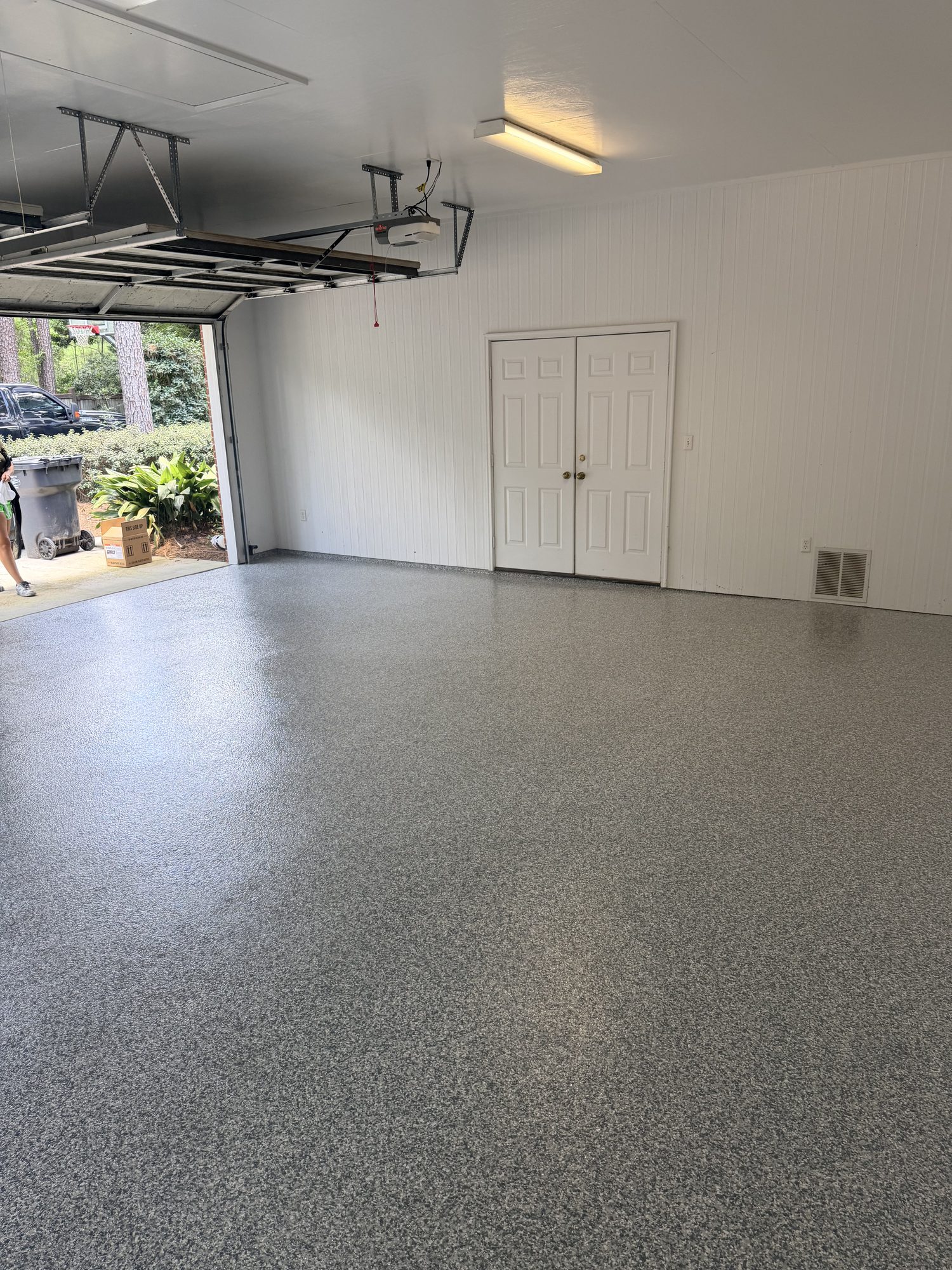
Metallic Epoxy
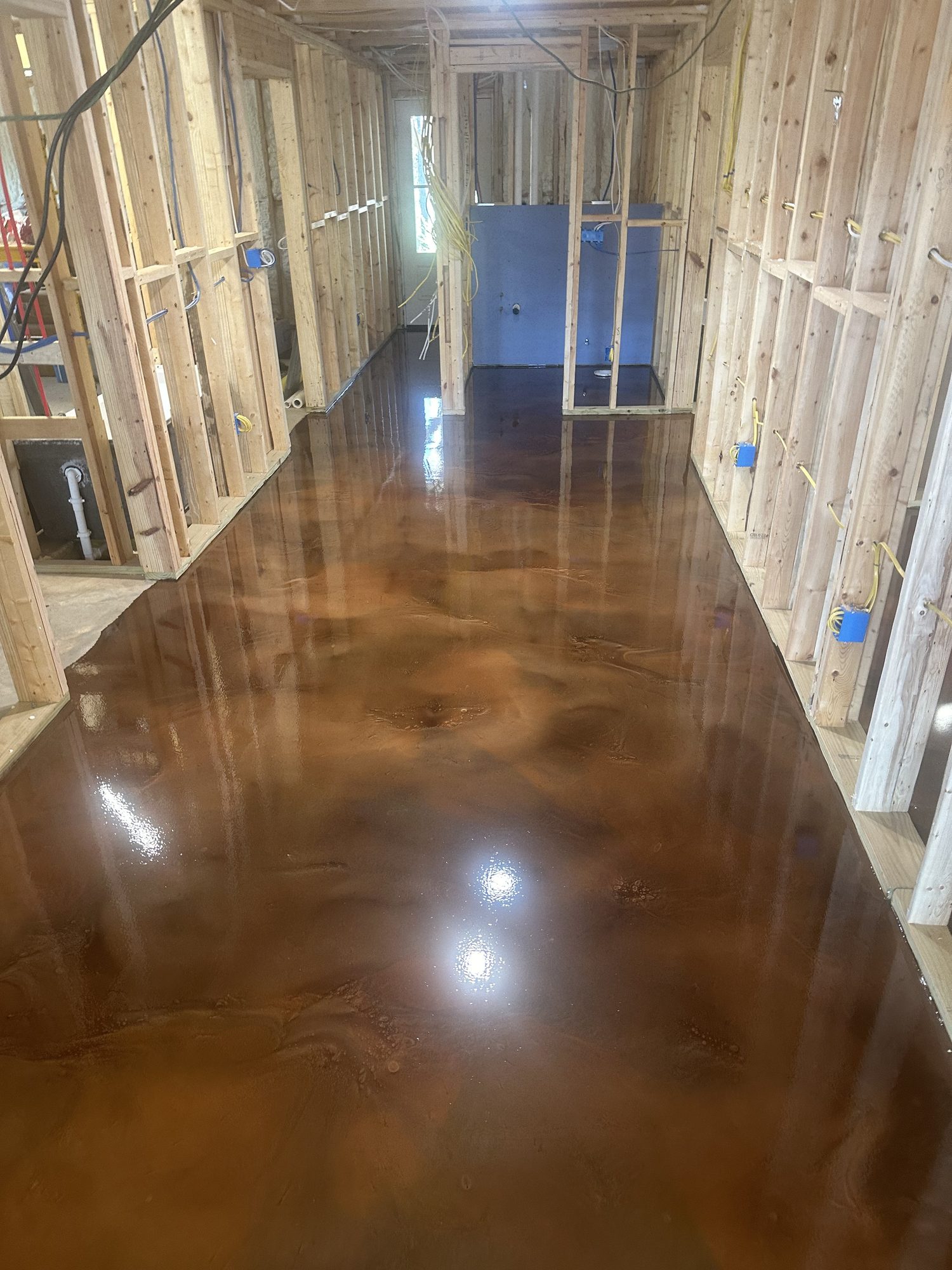
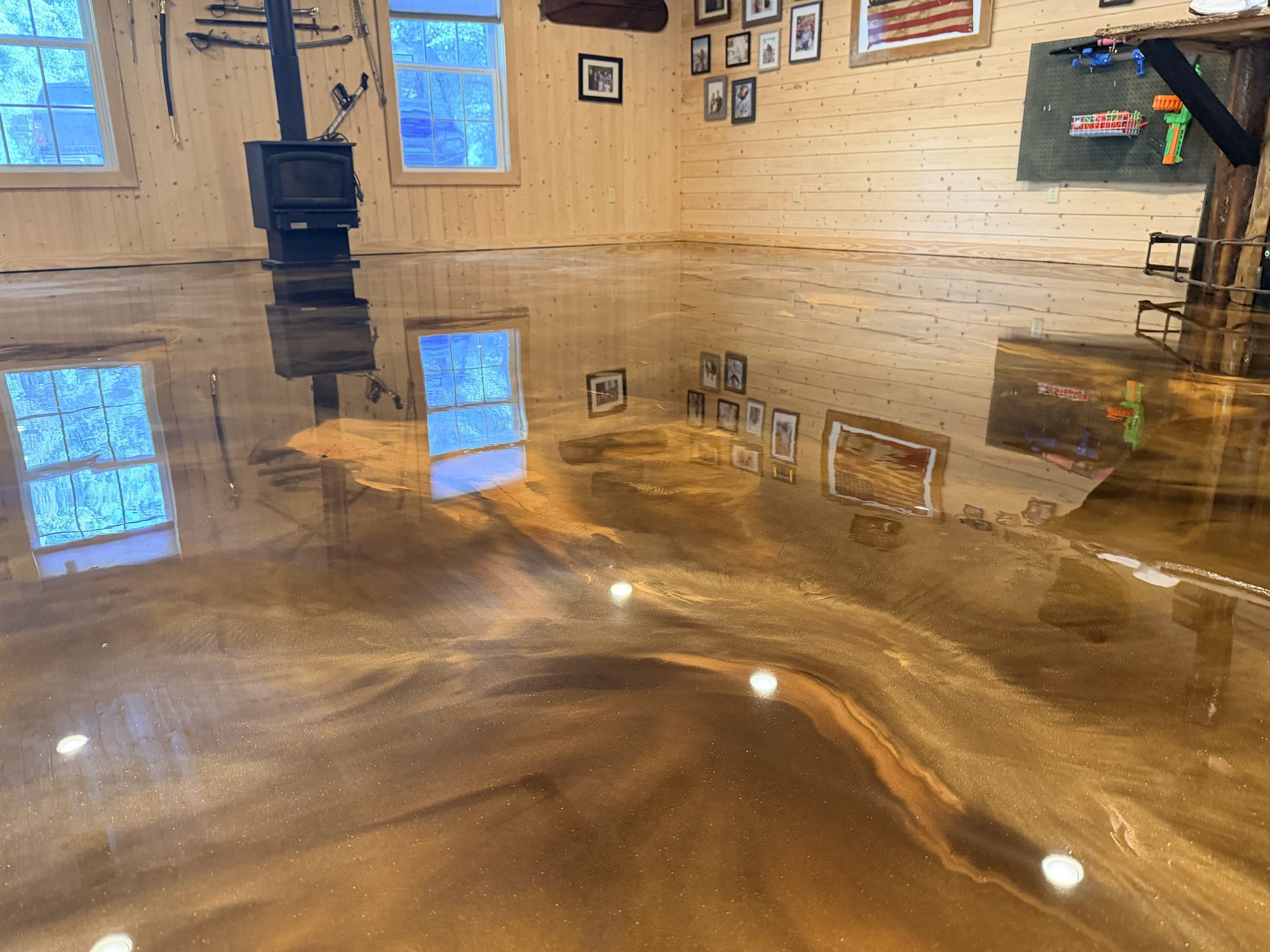
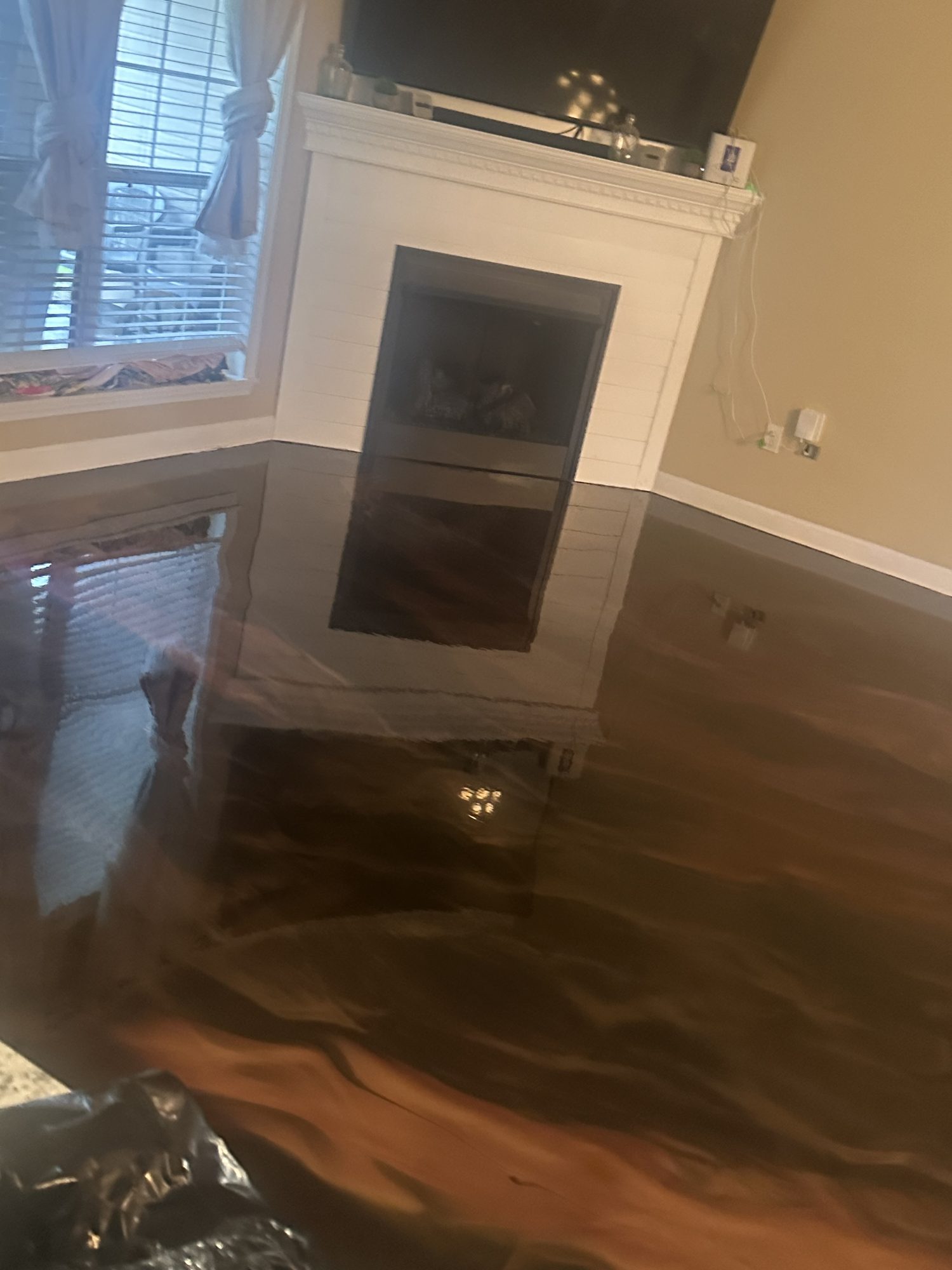
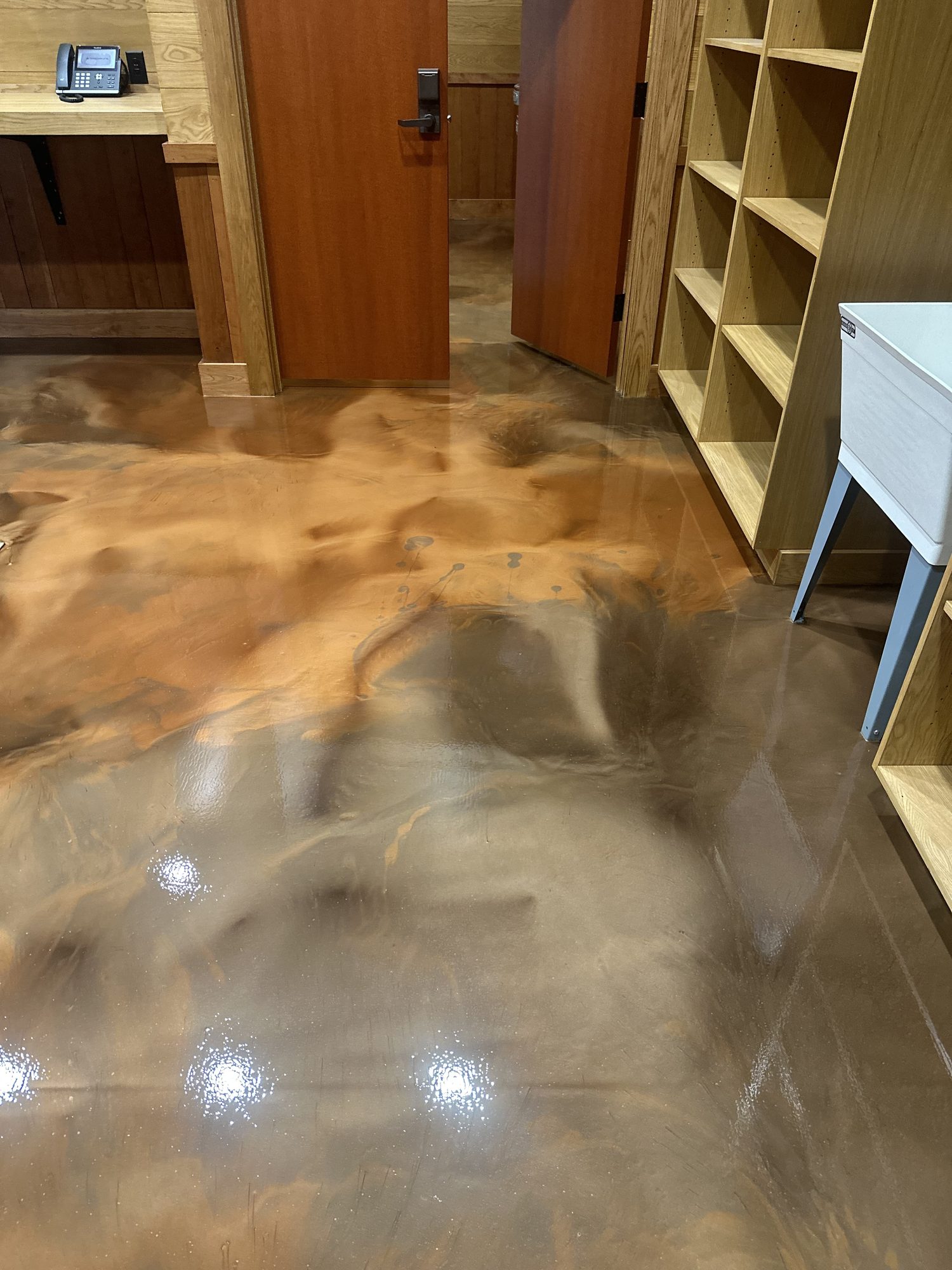
Metallic pigment moved through clear resin while it is wet, so the floor ends up with depth and movement no two slabs share.
The pigment suspends in clear resin and then gets worked while the floor is still open. How it is moved decides everything: where the light pools, where the color goes dark, how the pattern runs across the room.
More on metallic epoxy
Questions about flake epoxy flooring
If yours is not here, call and ask. We would rather talk it through.
What does flake epoxy flooring cost?
It depends on the square footage, what shape the slab is in, and which system the room actually needs. We look at the floor and give you a number for that floor. We do not quote concrete work off a price list.
Do you have references?
Yes, and we try to match them to your job. If you are asking about a commercial kitchen we will point you at a commercial kitchen, not a garage.
How long before we can use it?
Foot traffic is usually the next day. Vehicles and heavy loads need longer, and the exact cure time depends on the system and the temperature while it is curing. We give you real numbers for your floor before we start.
What if the slab is cracked?
Cracks get repaired as part of the prep with products that move the way the finish over them moves. A crack that is still moving with the seasons is a different conversation, and we will say so if that is what we find.
Do you do both homes and businesses?
Both. This one goes into houses and working buildings in roughly equal measure.
Where we install it
Good for
Garages, porches, patios, storage facilities, locker rooms.
Thinking about flake epoxy flooring?
Call (205) 238-8111 and describe the room. We will tell you whether this is the right system for it.