
About
Kortni Brewster started with a floor buffer
Stripping and waxing floors is where he came into the trade. 12 years later the work is polishing and resin, and it is still his hands on the machine.
How the company started
Kortni Brewster came into this industry through his family’s business. He went out on his own doing floor stripping and waxing, which is unglamorous work and an education in what is actually under a floor.
Stripping teaches you the thing that matters most in this trade: what is on a slab has to come off properly before anything new will hold. Most coating failures are bond failures, and bond failures start with prep somebody rushed.
What kept him in it was the variety. No two floors come out the same, particularly once you get into polishing and metallic work, where the material moves differently every time. He talks about floors having their own personality, and after 12 years he still means it.
How we work
We look at the slab before we quote it. That sounds obvious and it is the step most often skipped, because it is easier to price square footage over the phone than to find out a floor has moisture coming up through it.
If a floor needs a system we do not think is right, we say so. If it needs repair before a finish, we say that too. Telling somebody their slab is not ready is cheaper for everybody than coating it anyway.
What you get
- 12 years finishing concrete, residential and commercial
- Sub contractors license, insured and bonded
- The owner on site, not just on the quote
- Prep that gets done properly before any finish goes down
- References matched to the kind of job you are asking about
How we pick a system for a room
Start with how the floor gets cleaned
This is the question that settles most of it. A floor that gets swept and occasionally mopped can take almost anything. A floor that gets hosed down, hit with degreaser and steam cleaned every night is a much shorter list, and in a commercial kitchen it usually comes down to urethane cement. People tend to start with how a floor should look. We start here, because a finish that cannot survive the cleaning routine will not last no matter how good it looked on day one.
Then what goes on it and what gets dropped
Hot tires pull at a coating in a way ordinary traffic does not, which is why garage floors get specified differently than basements. Forklift wheels, pallet corners and dropped tools argue for a thicker build. Chemicals matter less than people expect and more than they realize at the same time: a spill that gets wiped up is nothing, a spill that sits overnight is a different conversation.
Then moisture, which decides more than anything
Concrete on grade can pass vapor up through the slab for its whole life. If that moisture has nowhere to go and you put a sealed coating on top, pressure builds under the film and eventually lifts it in sheets. This is the most common cause of a floor failing that had nothing to do with the installer’s workmanship. It is also testable before anybody commits, and on a slab we have doubts about we would rather test than hope.
Only then, how you want it to look
Color and finish are the last question, not the first, and by the time the first three are answered the list is usually short. That is not a limitation. It is the difference between a floor that looks right for a decade and one that looks right for a season.
Prep is most of the job. The finish is the part you see.
Kortni Brewster, owner
What tends to go wrong
Worth knowing whoever you hire.
- A floor that turned yellow. Ordinary epoxy is not UV stable. In a garage with a window or a patio in the sun it will amber over time. That is why the top coat on our systems is polyaspartic, which holds its color.
- Flake that looks blotchy. The broadcast was not taken to refusal, so the chip density varies across the floor. It shows up clearly once the clear coat goes over it, and it cannot be corrected afterward without recoating.
- Cracks coming back through. A crack that is still moving with the seasons will telegraph through any surface finish. Filling it hides it for a while. If the slab is moving, that is a structural question and no coating answers it.
- A coating that peels in sheets. Almost always a bond failure, and bond failures are prep failures. Either the slab was not ground open, or something was left on it, or moisture underneath pushed the film off. The finish itself is rarely the culprit.
What to ask anybody
- Ask how they are preparing the slab. If the answer is acid etching or a pressure wash rather than mechanical grinding, ask why. There are situations where etching is defensible; most residential and commercial floors are not among them.
- Ask what the top coat is and whether it is UV stable. This is the difference between a floor that looks the same in five years and one that has gone yellow by the second summer.
- Ask who is actually doing the work. Plenty of outfits sell the job and subcontract the floor, which is how a quote and a result end up unrelated.
- Ask what happens if they find moisture. An installer who has not thought about it is an installer who will coat over it.
- Ask for references on your kind of floor. A beautiful garage tells you very little about whether somebody can put down a kitchen floor that survives a health inspection.
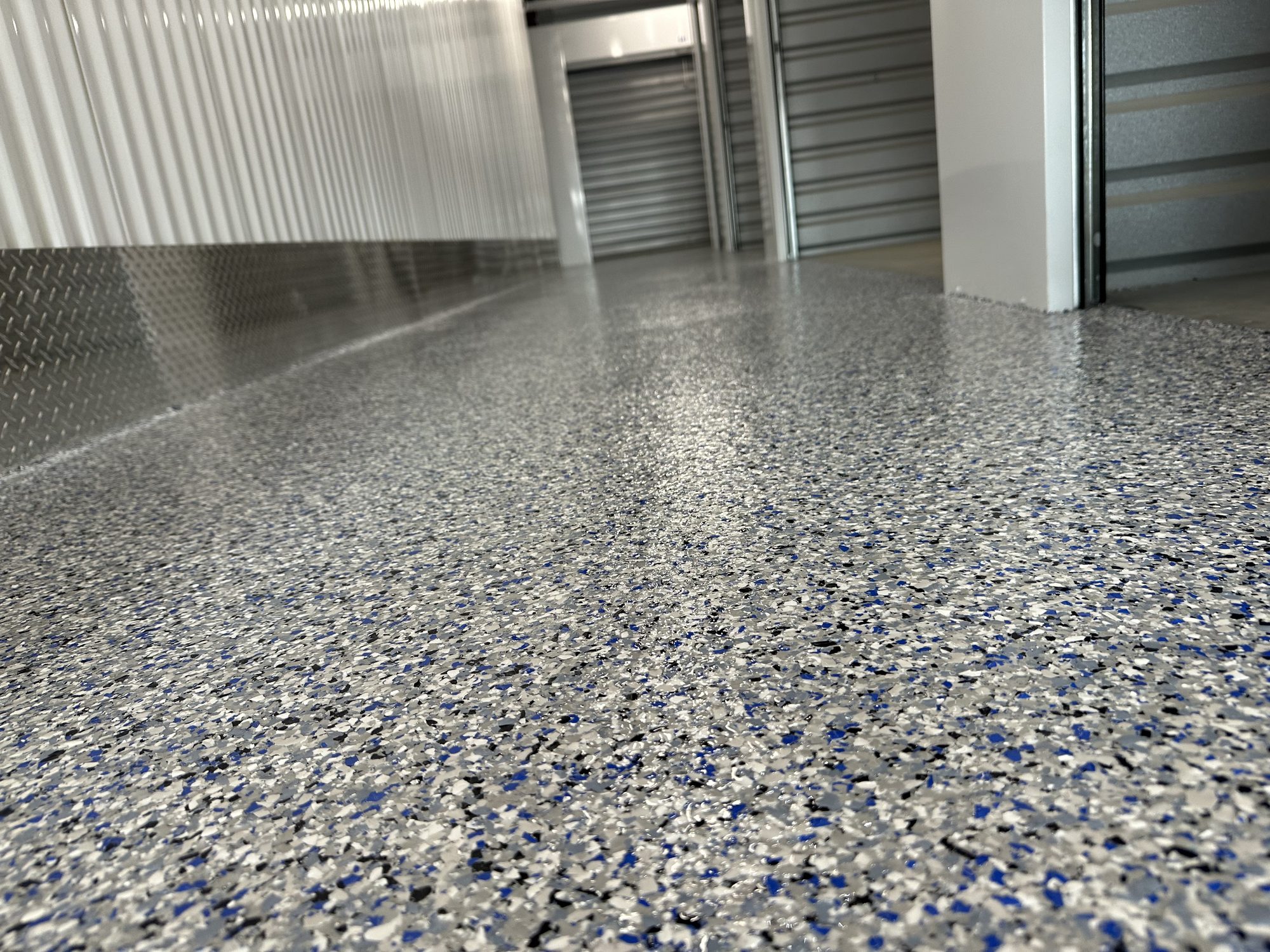
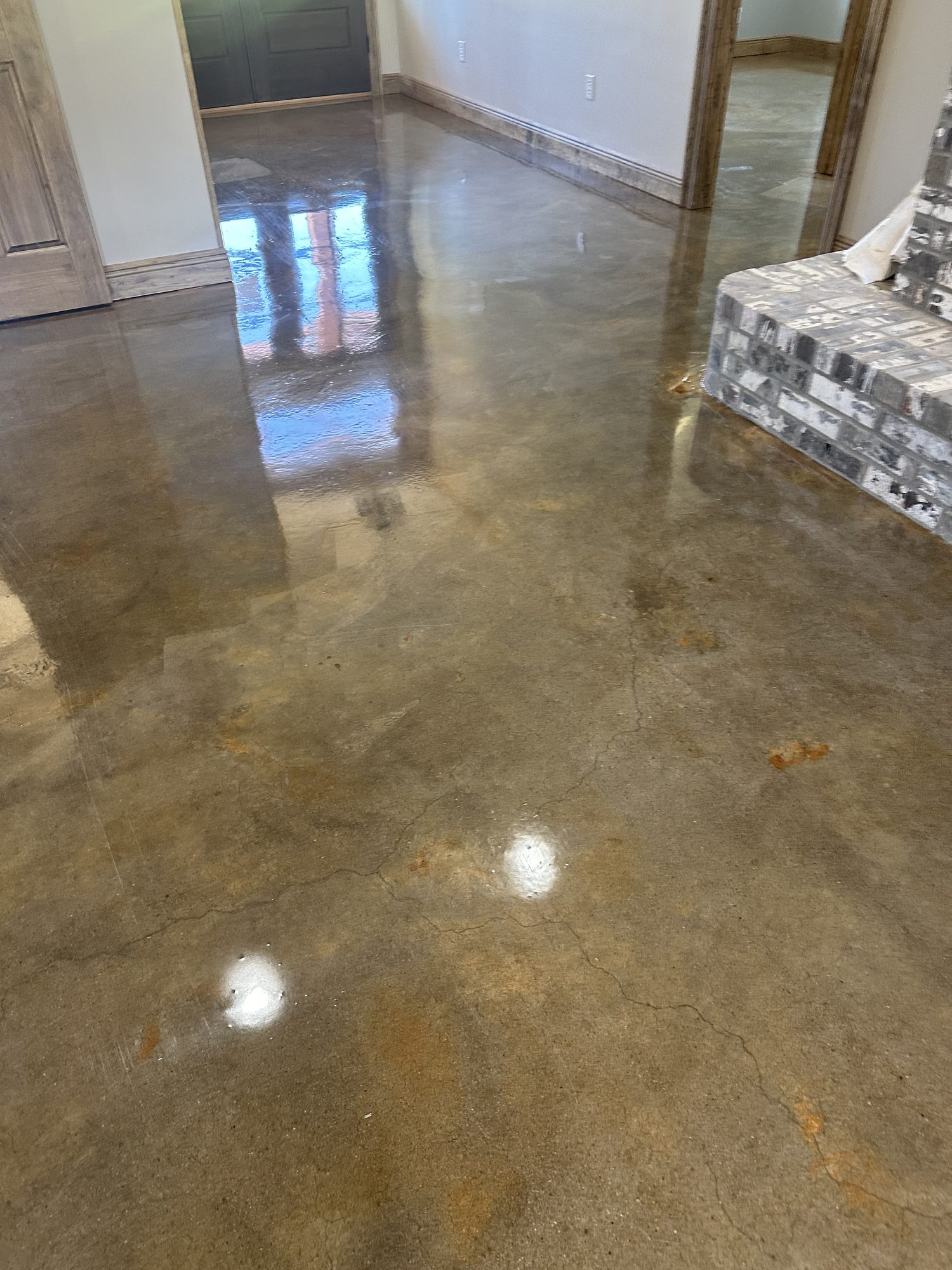
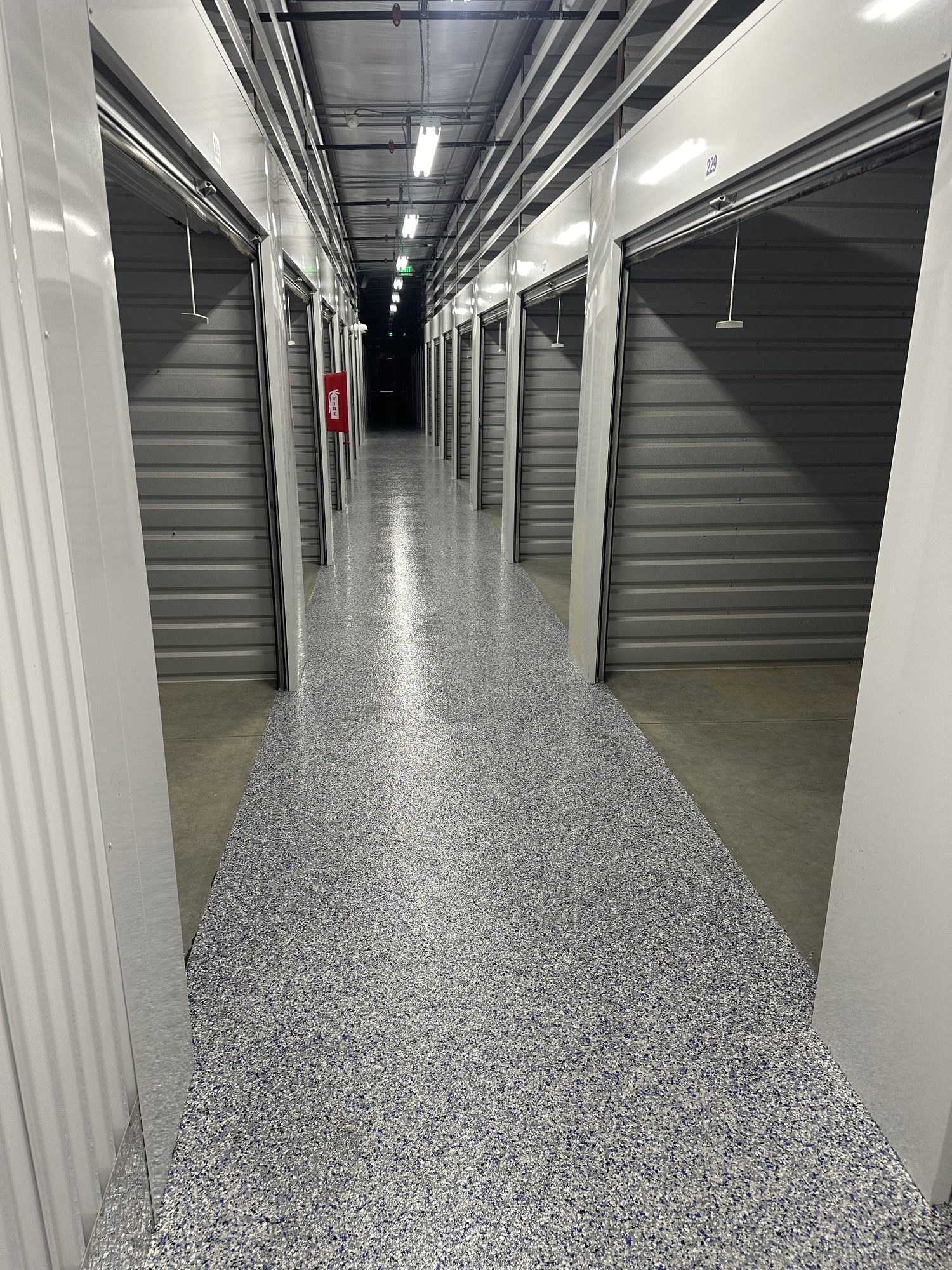
Every photograph on this site is our own work. More of it is in the gallery.
Questions
Who actually does the work?
Kortni Brewster and his in house crew. We do not subcontract floors out. The person who looks at your slab and quotes it is the person running the grinder on it.
Do you have references?
Yes. Ask for the kind of job you are considering and we will point you at one.
How long have you been doing this?
12 years. Kortni came up through the trade starting with floor stripping and waxing before moving into polishing and coatings.
Are you licensed and insured?
Sub contractors license, insured and bonded. Documentation is available if a commercial client or property manager needs it on file.
What areas do you cover?
About 100 miles out of Huntsville, taking in the Huntsville and Birmingham metros, the Shoals, and down toward Montgomery and Auburn.
Want the floor looked at?
Call (205) 238-8111. Describe the room and the shape it is in, and we will go from there.